Vicenza province entrusts us with selecting odor examiners for field olfactory monitoring
Vicenza Province has entrusted us with the selection of a panel of odour examiners for a field olfactory monitoring programme across the municipal territory, with particular focus on residential areas near the industrial zone, where odour nuisance has been reported.
The activity includes on-site surveys carried out along predefined routes and time windows, as well as the digital recording of observations through Geonose, the dedicated app developed by LOD.
Industrial emissions: why the province and the municipality are taking action
As part of environmental protection activities and the management of odour nuisance, Vicenza Province has launched a field monitoring programme aimed at detecting, classifying and mapping odours perceived in specific areas of the municipal territory, with particular attention to zones most exposed to the ground-level impact of odorous emissions.
The initiative also follows reports recorded in recent months, relating to unpleasant odours preliminarily attributed to the local industrial context. Addressing these situations requires technical tools capable of turning a subjective perception into objective, structured data.
Who the odour examiners are
(and why this is not an improvised role)
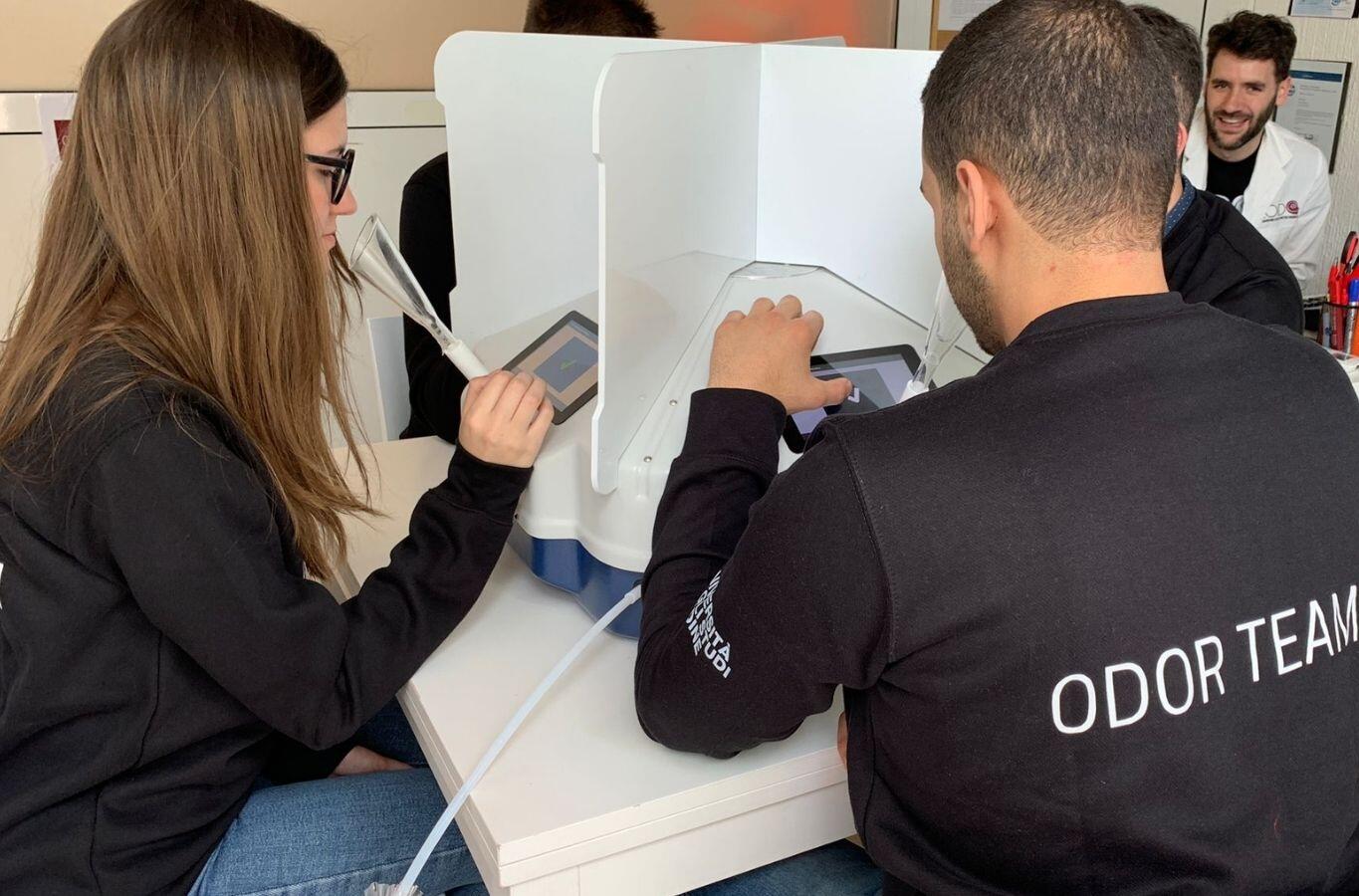
The term “odour examiners” refers to qualified examiners selected and trained to perform sensory evaluations in a controlled and repeatable manner (often referred to, in the context of Odour Field Inspection, as odour field inspectors).
Odour measurement uses the human sense of smell as the instrument, within a framework defined by European technical standards, including:
- Dynamic olfactometry (UNI EN 13725:2022): the reference method used to determine the odour concentration of a gaseous sample, using a selected panel and an olfactometer.
- Odour Field Inspection (UNI EN 16841:2017): a method for the direct determination of ambient air odours over a defined territory, carried out by qualified examiners according to a monitoring plan established in advance.
In this framework, an odour examiner is not simply “someone with a good nose”, but a selected role based on the concept of an “average olfactory sensitivity”, as required by UNI EN 13725:2022, to ensure that observations are consistent and comparable.
From method to practice: how field monitoring will be carried out
The programme includes scheduled surveys across the municipal territory. Odour examiners will follow predefined routes and stop at fixed monitoring points.
Each field survey requires the examiner to:
- smell the air at defined intervals;
- record the observation (presence/absence, odour character and intensity) using the Geonose app installed on their smartphone.
The overall duration of the monitoring will depend on the objectives set by the contracting authority. The goal is not to capture a single episode, but to build a dataset large enough to represent seasonality, weather conditions and the variability of emissions over time.
Our technical contribution: selection, qualification and ongoing support
LOD, appointed to deliver the programme, will be responsible for selecting and training odour examiners, planning field activities and processing the collected results.
Requirements to become an odour examiner:
- The recruitment notice published by Vicenza Province sets out specific requirements to become an odour examiner, including:
- age 18+;
- availability of a smartphone with internet connection;
- residence in the municipality under investigation or in municipalities within the Western Vicenza area;
- no direct involvement in the odour issue being investigated;
- no diagnosed respiratory conditions that could affect olfactory performance (e.g., asthma, significant allergies, etc.);
- availability of a private vehicle for travel.
The selection process includes specific checks on olfactory sensitivity and the ability to discriminate environmental odours, as well as attendance on dedicated days for testing and training.
Why the "human nose" remains the best tool to assess odor impact
When measured through standardised protocols, human olfactory perception provides information that is difficult to obtain using instrumental sensors alone, especially when the purpose is to assess the impact as experienced by the local population.
The results from this field monitoring programme will provide a detailed picture of territorial exposure to odours. This evidence will support competent authorities, including ARPAV, in a structured pathway aimed at improving air quality and reducing odour nuisance.
For further information, please consult the press review.
